Don't Buy the Doogee S200 Ultra Rugged Phone Until You Read This Full Analysis
Introduction
The Doogee S200 Ultra Rugged Phone has arrived amid growing consumer interest in devices built to survive harsher environments than a pocket or desk. Rugged phones promise water, dust, and impact resistance along with long battery life and practical features for outdoor work, construction, field research, and recreational activities. However, buying a rugged phone is not the same decision as buying a mainstream flagship: buyers need to weigh durability trade-offs, actual battery endurance, real-world performance, software support, and repairability.
This article provides a full editorial analysis of the Doogee S200 Ultra Rugged Phone for readers considering it as their next workhorse device. It covers the product's strengths, potential pitfalls, and how it compares to other rugged options on the market. The aim is to equip practical buyers—tradespeople, outdoor enthusiasts, first responders, and anyone who prioritizes resilience—with the key information they typically care about so they can decide if the S200 is the right fit or whether they should look elsewhere.
Product Overview
The Doogee S200 is positioned as an “ultra rugged” Android phone aimed at users who need durability above all else. Doogee’s rugged lineup historically emphasizes high-capacity batteries, reinforced chassis, and performance suited to everyday tasks rather than high-end gaming or photography. The S200 continues this focus with what Doogee describes in marketing materials as military-grade protection, multiple waterproofing standards, and practical features like programmable hardware keys and long-lasting batteries.
Because rugged phones are often updated frequently with small changes, prospective buyers should confirm the exact specifications for the unit they plan to buy. Below is an analysis broken down into the elements that most influence ownership experience.
Detailed Analysis
Design and Durability
Rugged phones trade sleekness for survivability. The S200 follows that pattern with a thick, textured chassis, reinforced corners, and sealed ports. Key considerations include the ingress protection (IP) rating and any stated military-spec standard—these indicate resistance to water, dust, and shock. For real-world use, buyers should ask if the seals are user-serviceable; sealed batteries and glued screens can complicate repairs.
Comfort and size matter. The S200 is likely heavier and larger than a typical smartphone, which affects pocketability and single-handed use. For professionals carrying tools or wearing gloves, physical controls such as programmable buttons and tactile volume/lock buttons are more important than thin bezels. The S200 appears to prioritize these pragmatic details.
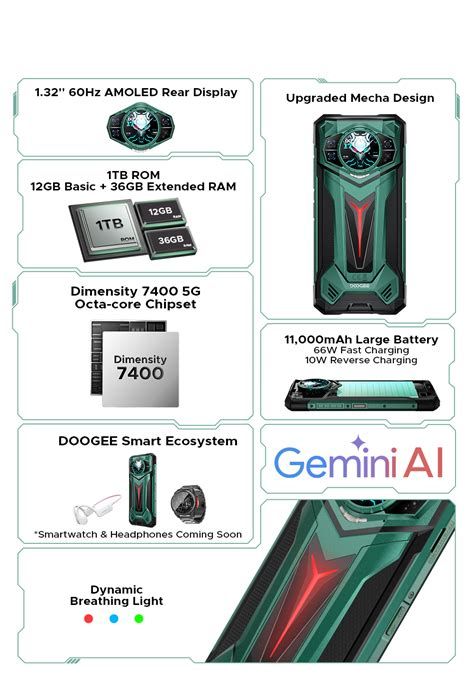
Display
Rugged devices are often used outdoors, so display brightness and legibility under sunlight are crucial. The S200’s display should be evaluated for peak nits, automatic brightness behavior, and whether it offers a glove mode or wet-touch functionality. Rugged screens sometimes use thicker glass and anti-glare coatings—benefits for impact resistance but potential compromises in color vibrancy.
Screen resolution and refresh rate affect battery life and perceived snappiness. Many rugged phones opt for conservative refresh rates (60–90Hz) to conserve power. Buyers who care primarily about maps, field forms, or video playback will find a mid-tier resolution adequate, but those who want crisp media viewing should compare samples in person.
Performance and Thermal Behavior
Doogee typically uses mid-range processors that balance power and efficiency. For day-to-day tasks—email, navigation, documentation, photography—these chipsets usually perform well. However, heavy multitasking or extended camera processing can push thermal limits when combined with rugged designs that restrict airflow.
Thermal throttling can be more pronounced in rugged devices due to thick, insulating materials. Buyers should look for third-party stress test results and user reports on sustained performance. If the S200 will be used for data collection, offline mapping, or running specialized apps, confirm the model’s RAM and storage options and whether it supports expandable storage.
Battery Life and Charging
Long battery life is a defining trait of rugged phones. The S200 is marketed with a large battery capacity suitable for multi-day fieldwork. Real-world battery life depends on display brightness, network conditions, and background services. Look for independent battery run-time tests for mixed usage (talk, GPS, camera, cellular data) rather than manufacturer-claimed screen-on time.
Charging behavior matters in daily workflows. Verify whether the phone supports fast wired charging, wireless charging, and reverse charging (power bank mode). Also, check the reliability of port covers—if they’re flimsy, they can compromise water resistance over time. For many field users, the inclusion of both standard wired fast charging and compatibility with common power banks is essential.
Shop the latest Electronics picks on Amazon.
See Deals →Cameras and Sensors
Rugged phones historically deprioritize flagship camera performance, favoring robustness over thin glass and complex assemblies. The S200 likely offers a versatile camera set for documentation—wide, ultra-wide, and macro—adequate for scanning receipts, photographing job sites, or capturing evidence. Buyers who rely on high-quality night photography should temper expectations: sensor quality and image processing usually trail mainstream camera-centric phones.
Important sensors for fieldwork include GPS accuracy, barometers, thermometers, and pogo-pin accessories for external modules. Confirm whether the S200 uses multi-band GNSS (GPS, GLONASS, Galileo) and whether maps and navigation apps perform reliably in canyons or dense urban areas.
Software and Security Updates
Software support is a frequent weak point for niche phones. Doogee’s track record varies; some models receive timely security patches and occasional Android upgrades, while others do not. For business deployments, buyers should ask the seller or manufacturer about promised update windows and whether the device supports enterprise mobility management (EMM) solutions.
Preinstalled bloatware can consume resources. Check if the S200 ships with minimal third-party apps or allows easy removal. Additionally, biometric options (fingerprint, face unlock) and their reliability under dusty, wet, or gloved conditions are practical concerns.
Connectivity, Ports, and Expandability
Essential connectivity features include cellular band compatibility (confirm that the phone supports the carrier bands used in the buyer’s region), dual SIM if required, and Bluetooth/Wi‑Fi standards. Many rugged phone owners need NFC for payments or access control—verify presence and functionality.
Ports should be robust: sealed USB-C, a 3.5mm jack (if present) with good sealing, and a microSD slot with a secure tray or separate sealed flap. Antenna placement and external accessory support (magnetic mounts, charging docks, vehicle cradles) are other practical elements to verify before purchase.
Real-World Use Cases
The Doogee S200 targets a range of use cases where ordinary phones frequently fail:
- Construction and trades: durability against drops, dust sealing to survive jobsite debris, and long battery life across a full workday.
- Outdoor recreation and expedition: GPS reliability, emergency features, and water resistance for boating, hiking, and winter sports.
- Field data collection: expandability for storage of offline maps and long sessions using camera and form-filling apps.
- Industrial or military-adjacent uses: rugged mounting, programmable buttons, and compatibility with PPE (gloves, face shields).
In each case, the practical buyer will prioritize reliability, predictable serviceability, and clarity on warranty terms more than headline specs.
Pros & Cons
- Pros
- Durable construction designed for harsh environments (drops, dust, water).
- Large battery capacity intended for long field use.
- Practical features such as programmable hardware buttons and physical controls usable with gloves.
- Potentially good value for the rugged feature set versus niche enterprise devices.
- Cons
- Software update cadence and long-term support are often uncertain for niche brands.
- Bulk and weight can be inconvenient for everyday carry.
- Camera performance and display refinement may lag mainstream consumer phones.
- Repairability can be limited by sealed parts and proprietary fasteners.
How the Doogee S200 Compares (Quick Reference)
| Feature | Doogee S200 (reported/typical) | Blackview / Ulefone / CAT (typical alternative) |
|---|---|---|
| Primary focus | Rugged durability, long battery life | Rugged durability; some models emphasize camera or thermal imaging |
| Durability ratings | High IP rating, military-style drop protection | High IP ratings and certified drop protection vary by model |
| Battery | Large-capacity battery for multi-day use | Similar capacities; some models offer user-replaceable batteries |
| Performance | Mid-range chipset adequate for field apps | Range from entry to mid-range; some offer higher-end chips for speed |
| Camera | Practical cameras for documentation, not flagship-level | Some competitors add thermal cameras or higher-end sensors |
| Software updates | Varies; confirm with seller/manufacturer | Also varies; enterprise-focused makers may offer longer support |
| Price | Positioned as value-focused rugged | Ranges from budget rugged to premium enterprise-priced |
Buying Guide: What to Check Before Purchasing
For a rugged phone like the Doogee S200, the purchase decision should be guided by practical checks rather than marketing claims. The following checklist helps align purchase choice to real-world needs.
1. Confirm the Exact Durability Certifications
Look for specific IP ratings (e.g., IP68, IP69K) and the military standard listed (for example, MIL-STD-810). Verify what those tests actually cover—dust ingress, immersion depth and duration, and drop heights. Also ask about the warranty coverage for water or impact damage.
2. Verify Cellular Bands and Carrier Compatibility
Ensure the model supports the LTE/5G bands used by your carrier and that VoLTE and Wi‑Fi calling work if you rely on them. International travelers should confirm regional variants and roaming support.
Find top-rated Electronics products at great prices.
View Offers →3. Check Battery Life in Real-World Tests
Look for independent battery benchmarks or user reports that match your typical usage pattern (heavy GPS, intermittent connectivity, camera use). Manufacturer numbers are helpful but rarely match field use under variable temperatures and network conditions.
4. Evaluate Software Update Policy
Ask the seller or manufacturer how many years of security patches and OS upgrades are promised. For organizations, insist on a written statement about update frequency if long-term support is necessary.
5. Inspect Port Seals and Replaceable Parts
Evaluate the quality of rubber flaps, SIM trays, and any removable covers. These are common failure points that lead to ingress. If repairability matters, check if the battery is replaceable and whether spare parts are available.
6. Test Controls and Usability with Gloves
If the phone will be used with gloves or in wet conditions, test the buttons, glove mode, and touch responsiveness. Programmable buttons should be easy to map to useful functions (torch, push-to-talk, camera).
7. Consider Weight and Carryability
Balance the need for durability with everyday comfort. A very heavy device may be ideal for daily on-site work but awkward for off-duty use. Confirm dimensions and handle it if possible before buying.
8. Read Multiple Hands-On Reviews
Seek out long-term reviews and forum threads describing performance after months of use. Early impressions can be positive, but sustained durability is revealed over longer periods in varying conditions.
Price vs. Total Cost of Ownership
Rugged phones can be cost-effective when they reduce replacement frequency, downtime, and maintenance for field teams. Buyers should calculate total cost of ownership: purchase price, expected lifetime in their use case, repair costs, and the cost of downtime if the device fails during critical operations. For many professional users, a slightly more expensive device with a demonstrated track record and a solid warranty is a better value than a cheaper model with unknown longevity.
Conclusion
The Doogee S200 Ultra Rugged Phone presents the features that attract buyers to the rugged category: reinforced design, long battery life, and practical controls for use in demanding environments. It is a compelling option for those who need a device that can survive drops, water, and extended field use. However, the most important considerations—software support, real-world battery performance, repairability, and carrier compatibility—require careful verification before purchase.
Potential buyers should view the S200 as a purpose-built tool rather than a general-purpose flagship. If durability and long on‑battery uptime are top priorities and the S200’s confirmed specifications match a buyer’s needs, it may be suitable. If long-term software updates, camera quality, or lightweight daily carry are higher priorities, other options may be more appropriate. In short: don’t buy the Doogee S200 until the buyer checks certifications, confirms compatibility with intended networks and accessories, and reviews independent long-term user reports to ensure it will meet real-world needs.